
Damien Soitout
Water, shade, stop: a heat protocol you set before the day, because willpower does not cool a body and heatstroke is an emergency.
The bottle is the protocol. The sun is not a test you pass by staying in it.
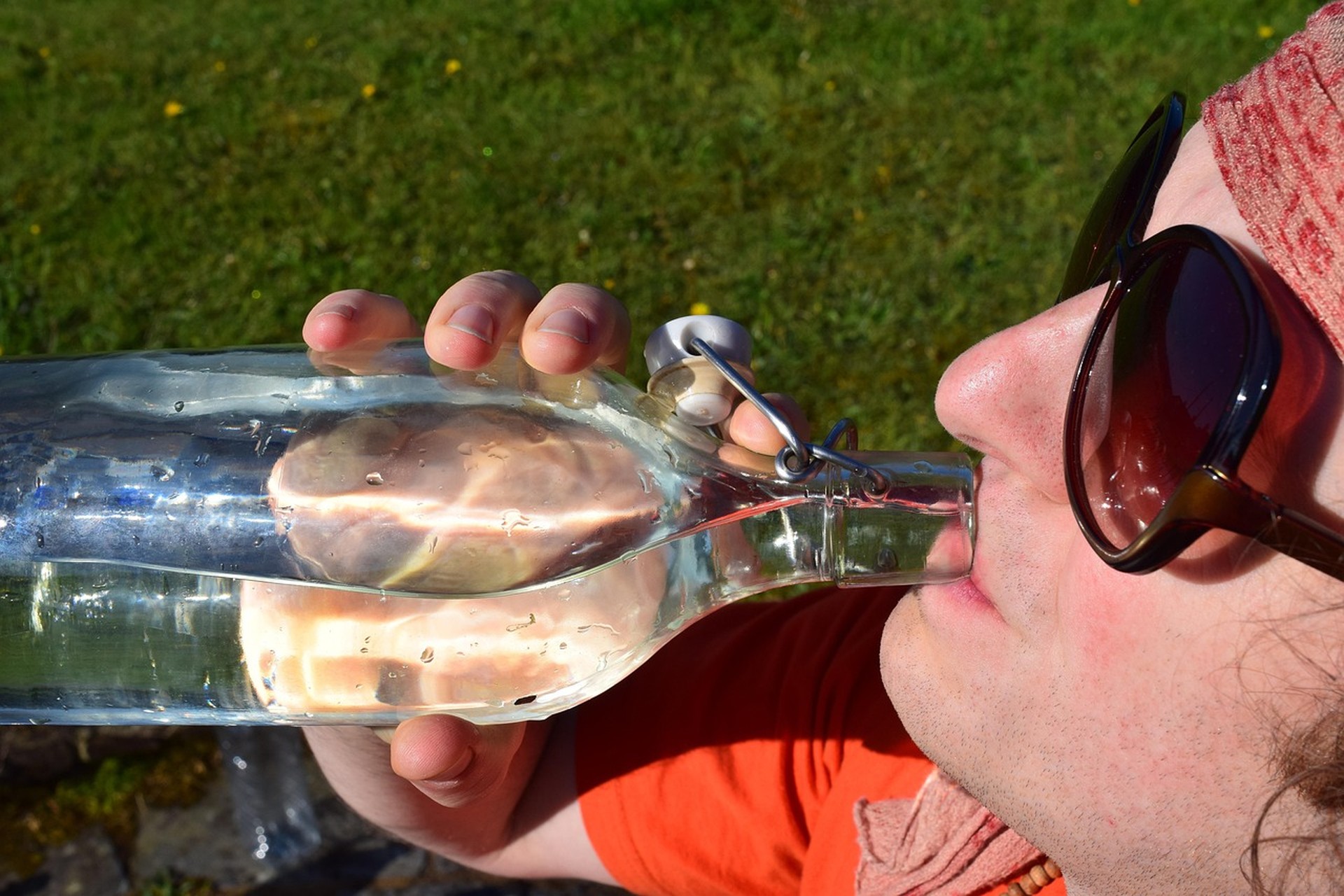
A hot week arrives and a certain kind of person decides to outlast it. They keep the same outdoor hour, the same pace, the same refusal to look weak, and they call the headache discipline. Heat is not impressed by discipline. Water, shade, stop. Those three are the protocol, and they are set before the day starts, not negotiated at the moment you are already too hot to think well. I have negotiated at that moment. The negotiation always ends with ten more minutes, and ten more minutes is how a manageable afternoon becomes a medical problem. The person in the photograph is drinking in hard sun. The bottle is the right object. Staying in that sun to prove something is the wrong use of it.
The World Health Organization's fact sheet on heat and health is blunt. Heat is an environmental and occupational hazard. Heat stress is a leading cause of weather-related deaths. It can worsen heart disease, diabetes, asthma, and mental strain, and it raises the risk of accidents. Heatstroke is a medical emergency. You do not need a disaster declaration for any of that to be true on an ordinary hot week in an ordinary town. A warm month is enough. The protocol is for any reader in any warm month, not for a headline about a record and not for a contest with your younger self.
The impact of stress on health belongs beside heat because the body does not file them in different cabinets. A hot day is a physiological demand. Adding a work demand, a short night, and a decision to “push through” is how people discover their limit in a car park. The art of relaxation is not a spa essay you save for winter. In August it is the permission to stop while stopping still works. A loud month in the body was about sleep when the news was loud. This page is about temperature. The body is the same ledger. It keeps the hours you stole and the heat you pretended not to feel.
Thirst is a late signal. If you wait for it on a hot day, you have waited past the easy part. Drink water through the day, starting before you go out, and keep the bottle where you can see it. The NHS page on heat exhaustion and heatstroke lists being very thirsty among the signs that exhaustion is already underway, along with tiredness, dizziness, headache, nausea, cramps, heavy sweating, and skin that has gone pale and clammy. A change in skin colour is harder to see on brown or black skin, so do not use colour as your only test. Use the way the person feels, including yourself. If thirst is how you noticed, you are no longer in the prevention chapter. You are in the response chapter. Response is: stop, cool, water, and watch the clock.
Alcohol and a heavy meal are a poor plan for the hottest hours. So is a locked car, for a child, an older person, or an animal, for any number of minutes you call short. I say that because people still do the arithmetic of “just a moment” and the arithmetic is wrong. The moment is the hazard. If you are responsible for someone who will not ask for water, a child, a person who is ill, someone whose judgment heat will fog, you put the bottle in their hand on a schedule, not on their request. Ready.gov's page on extreme heat notes that children and people with certain illnesses and chronic conditions are at greater risk, and that humidity makes heat feel worse than the number on a thermometer. Believe the humidity. A “dry” number that felt fine in another climate is not a permission slip here.
Do not make the bottle a personality. You do not need a special vessel or a public streak. You need water you will actually drink, refilled, in reach, including at the desk if the desk is the hot place. Indoor heat kills people who never “went out in the sun,” especially in rooms that do not cool overnight. If your work is a kitchen, a site, a warehouse, a delivery round, the protocol is part of the job, the way a guard on a blade is part of the job. Six tips for a healthy entrepreneur are a general list. Heat does not care that you are the founder. It cares that you are a body in a hot room, and the body needs water on a clock.
Shade is not a mood. It is a place you can get to: a room that is actually cooler, a building you are allowed to enter, the library, a mall, a shop, the house of someone who will not make you perform toughness. Ready.gov tells you to identify those places before the heat, and it tells you not to rely on a fan as your main cooling. A fan moves air. It can make you feel as if you are coping. It does not lower your body temperature by itself, and it does not prevent heat illness. I have sat in front of a fan and called it a plan. It was a breeze on a person who was still too hot. If the room is hotter than you are, moving the air around is not a rescue.
Name the shade the way you name a meeting. “At one, I am indoors.” “The outdoor work ends at eleven.” “The walk is early, or it is not.” A plan that says “I will see how I feel” is a plan to decide late, and late decisions in heat are made by a brain that is already impaired. Write the stop time where you will see it, and tell the person who expects you. Other people are how a hard stop survives your pride. If nobody knows you were supposed to be in the shade at one, you will bargain. If someone is waiting in the cool room, you are more likely to arrive. Use that. Pride is not cooling. An appointment in the shade is cooling.
Clothing, pace, and the hour of the day are part of shade even when you are outside. Cover the skin you can cover, slow the work, move the effort to the morning. The heroic version, noon, full pace, bare head, is how the photograph becomes an ambulance. A healthy body and a healthy mind is the longer argument that the mind you use for work is not separable from the flesh. Heat is the short version. You will not think your way out of a rising core temperature. You will move your body into a cooler place, or you will not. There is no third trick that lets you stay in the sun and keep the mind you need for the afternoon's decisions.
The NHS is specific about the clock. Heat exhaustion usually does not need emergency care if you can cool down within thirty minutes. If it becomes heatstroke, it is an emergency. So the stop has two layers. The first layer is the stop you set before symptoms: you end the exposure because the plan said so, while you still feel only hot. The second layer is the stop you obey at the first symptom: you get out of the heat, you cool the skin, you sip water if you can keep it down, you lie down, and you watch thirty minutes. If the person is not improving, if they are confused, if they faint, if the skin is hot and dry, if they are having a seizure, you treat it as the emergency the page says it is. You do not give them a speech about pushing through. You get help.
I want the first layer to do most of the work, so the second layer is rare. That means the hard stop is earlier than your self-image. Athletes, site leads, owners who “never sit,” parents who will not slow a family day: the self-image is the hazard. Willpower is not a refrigerant. It is a story you tell while the temperature rises. Replace the story with a rule you can say in one breath. Water on the hour. Shade at the named time. Stop at the first dizziness, not at the fifth. If you manage other people, the rule is the same for them, and you do not praise the person who skipped water. Praise is how a crew learns that illness is commitment. Commitment is showing up tomorrow. Heatstroke is a good way to miss tomorrow.
A warm month also steals sleep, and a short night makes the next day's heat harder. Cool the room as well as you can, keep the cutoff on the feed so you are not adding a loud mind to a hot body, and do not schedule the hardest outdoor hour on the back of a vigil. A loud month in the body already asked you to protect the night. Heat asks again, for a physical reason. The two protocols stack. Sleep, then water, then shade, then a stop you do not renegotiate. The six tips can wait. Today the tips are three words, and they are enough if you actually do them. You do not copy a harder session in the hottest week in order to feel that you have not gone soft. Soft is alive. Soft can train in September.
Tonight, or this morning before the heat builds, write the protocol on a card you will see. How much water you will drink, and where the bottle is. Where shade is at the hot hour, named as a place. What time the outdoor work stops, and who knows. What you will do at the first symptom, including the thirty-minute cool-down and the point at which you get help. Put the card in the bag or on the bench. Tell one other person if someone else is in the heat with you. Then keep it on the dull days as well as the dramatic ones. A protocol you only use when you feel heroic will be forgotten on the day you are merely busy, and busy is when people get hurt.
Water, shade, stop. Heat is a plan of those three, not a test of character. The sun in the photograph does not grade you. It heats you. Drink, get out of it, and quit while quitting is still a choice you can make with a clear head. The day you stay in it to prove you are serious is the day you were not serious about the body that has to do tomorrow's work.