
Damien Soitout

Cook once when prices rise. One session of cooking, eaten across the days, is a method. It is not a diet you have to join.
One pot, used more than once, is a method. It does not require a new name for the way you eat.
Cooking more when prices rise is a method, not a diet brand. The bill at the shop has been doing what bills do in a dearer season. People respond by buying an identity. They rename themselves after a plan, a powder, or a set of rules that photographs well, and they are surprised when the identity is expensive in a different way: special food, special time, special shame when the week gets messy. I am not offering you that. I am offering a kitchen method any household can use. Cook once. Eat from that work across the days that follow. The method does not care what you call yourself.
Healthy snack ideas is a different list, and I am not reprinting it. A snack list is useful when you are choosing what to keep in reach. This is about the main effort of feeding people, including yourself, when the same bag costs more than it did. 6 tips to be a healthy entrepreneur is about a working life and a body. Healthy body, healthy mind is the longer link between the two. Fall in love with the process, a nutritionist's results, is the posture I want you to borrow: love the repeated work, not the reveal. The art of relaxation belongs here only as a warning. A kitchen you treat as another performance will not relax you, and it will not save money. It will become a second job with better lighting.
The receipt is the inflation report. Read it, so you know which foods actually moved, and cook from those facts rather than from a slogan about “eating clean.” Clean is not a price. Beans, rice, eggs, seasonal vegetables, a pot of soup, a roast chicken used until it is gone: those are prices and meals. They are also, if you build the plate with some care, a way to stay fed without joining anything.
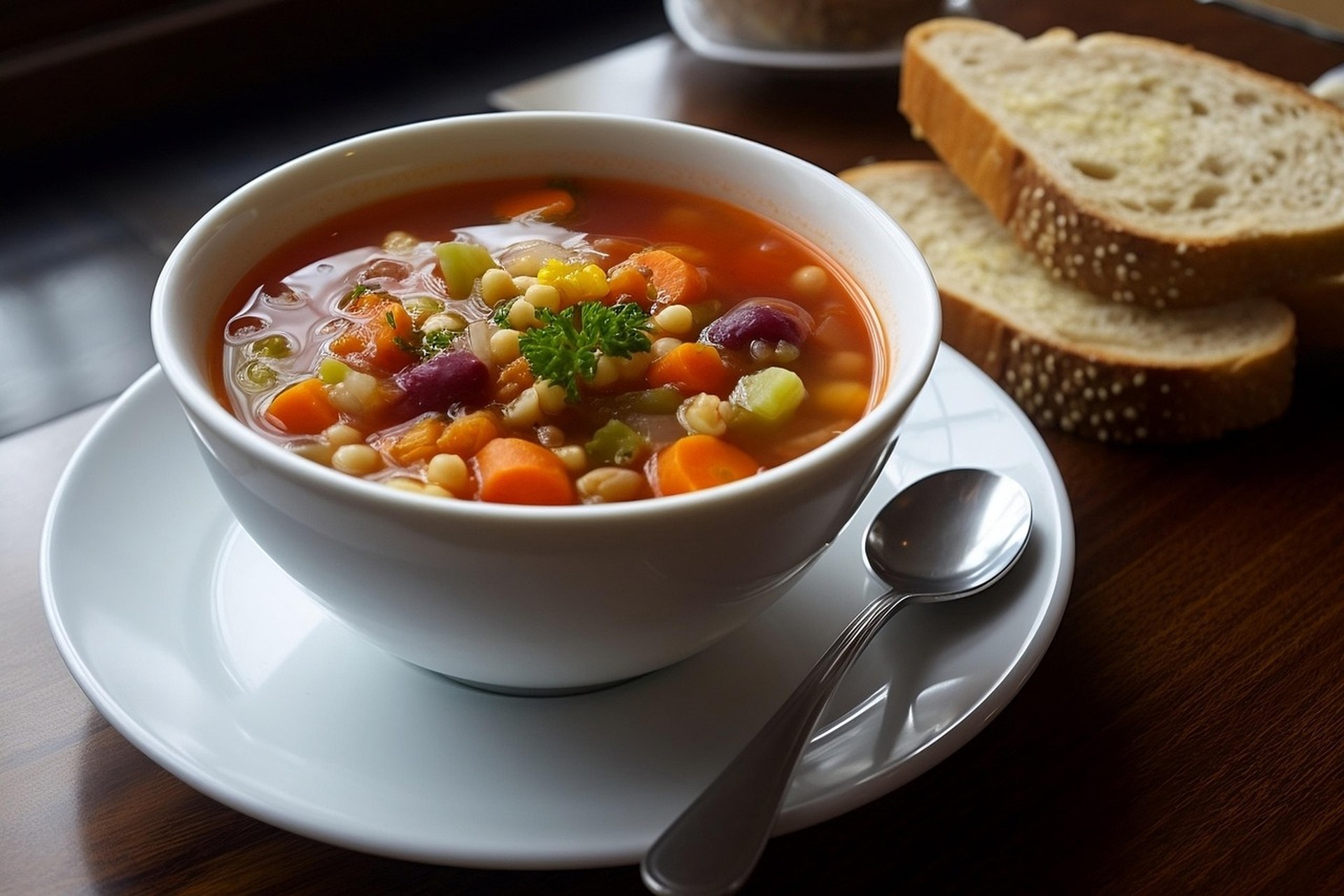
Cook once means one session that produces food for more than one eating. It does not mean a Sunday that destroys you and a fridge full of meals you resent by Wednesday. Choose a volume you will actually eat. A pot of soup, a tray of roasted vegetables, a pot of grains, a sauce that can sit on eggs or on noodles or on whatever bread you already buy. Two or three components, cooked while you are already in the kitchen, will feed more days than one elaborate dish you never want to see again. The elaborate dish is a hobby. The components are a method. Hobbies are allowed when you want them. Methods are what you need when the bill has gone up.
The session needs a cue, or it will lose to the takeaway that requires no decision. Tie it to a shop you already make, or to the short afternoon when the work day has ended. Let the short day end the work is the permission to have an evening that is not a second shift at a desk. A pot can live in that evening. A pot cannot live in an evening you have already sold to a glowing list. Why rest can make you more alert is the other half. A person who is too tired to cook will buy the expensive meal and call it a failure of character. Often it is a failure of an ending. End the work. Then cook, at a scale that leaves you able to do it again next week.
Write the eating, not only the cooking. “Soup at lunch for three days, eggs and vegetables at night, the rest of the pot on the fourth day” is a plan. “I batch cooked” is a boast. The plan is what saves the money. Food that dies in the back of the fridge is not thrift. It is a higher bill wearing a responsible face. Cook what your household eats. If someone will not eat the virtuous dish, the virtuous dish is waste. Ask, then cook. A household is not a staff review, and a plate is not a grade.
You do not need a new food religion to eat well under pressure. You need a pattern that is boring enough to repeat. The Harvard Healthy Eating Plate is a picture of proportions, not a membership. Vegetables and fruit take the largest share. Whole grains take a quarter. Healthy protein takes a quarter. Water is the drink, not a sugary one. Oils are used, not feared, and not confused with a deep fryer as a personality. You can hit that pattern with cheap foods. Frozen vegetables are vegetables. Oats are a grain. Eggs and beans are protein. The plate does not ask you to be interesting. It asks you to cover the bases more often than not.
The Dietary Guidelines for Americans, 2020-2025, are the official United States pattern for those years, a government document, not a club. Use them as a reference for a dietary pattern across a life, including how a household feeds itself, not as a script you must perform at every meal. A pattern survives a week in which one dinner is plain soup. A script breaks, and the break is where people buy the old expensive food and add guilt at no extra charge. Guilt is not in the guidelines. Do not import it.
The World Health Organization's fact sheet on a healthy diet describes the same kind of pattern for a wider map: fruit, vegetables, legumes, nuts, and whole grains, with limits on free sugars, salt, and the fats that do harm when they dominate. I am not turning that page into a quota you must hit before you are allowed to eat. I am using it as a check on the pot. If the pot is only a refined starch and salt, you have saved money and missed the point. Add the vegetable, the bean, the egg. If the pot is only a luxury protein you bought to feel serious, you have missed the price. The method works when the pot is both feedable and repeatable. Both. Not one.
The money moves in the meals you no longer buy one by one, and in the food you no longer throw away. It does not move because you announced a lifestyle. Compare two weeks honestly, with receipts, the way The receipt is the inflation report asks you to compare slips. One week of single meals bought tired. One week of a pot you cooked and actually ate. The difference is your number, taken from those two weeks. A method that only works at a price someone else made up is a brand. Yours has to survive your shop, your stove, and your people.
Waste is the leak inside the method. Label the box with the day you will eat it. Put the food you must eat first where you can see it. Cook a little less than your optimism suggests, until you know the real appetite of the week. Optimism is how fridges become compost. A smaller pot, finished, beats a heroic pot, mourned. If you live alone, the same rule holds at a smaller scale. Two portions and a plan is cook once. Six portions and a fog is a project you will resent.
Time is the other cost, and it should be counted. A session of an hour that replaces four tired purchases is usually a gain. A session of three hours that produces food nobody likes is a loss, even if the ingredients were cheap. Fall in love with the process means loving a process that fits. Shorten the menu until the hour is real. Salt properly. Use acid, herbs, and heat so the second day is still food and not a punishment. A second day that tastes like penance will send you back to the expensive meal by Thursday. Thursday is the test. Photograph Sunday if you must. Judge Thursday.
Prices do not ask your permission to remain high. A method you can keep is worth more than a sprint of perfect eating that ends in a takeaway and a speech about starting again on Monday. One practice beats a January performance, and the practice here is the session, repeated, not a new name in your bio. Put the session on the week the way you put any other work you intend to do. Shop for the pot, not for a fantasy of twelve cuisines. Cook. Eat it. Note what you would change. Do it again. The method is the pot. The brand is optional.