
Damien Soitout
Success you never post is still success. Keep a private record of what got done, and stop treating the feed as the only ledger.
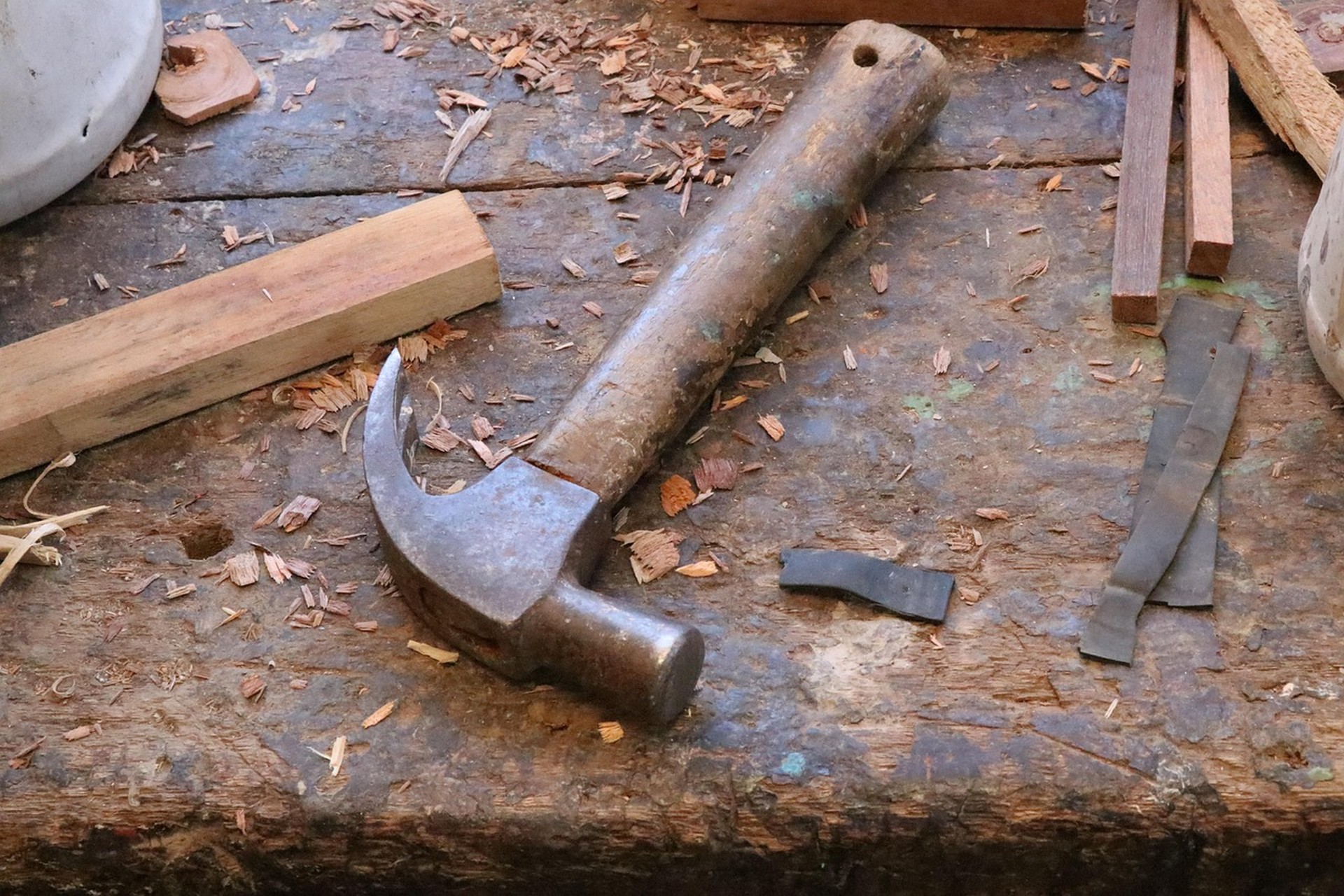
The work is in the bench. Nobody posted the shavings.
A result that never reaches a feed is still a result. I have to say it that plainly because the opposite idea has become the default. If a week cannot be photographed, captioned, and recognised by people who were not in the room, a certain kind of reader decides the week did not count. The bench in front of me says otherwise. The hammer is worn. The shavings are on the floor. The joint holds. None of that required an audience, and the joint does not become weaker because nobody clapped.
I keep a public life. I publish books. I answer interviews when a paper asks a real question. That public life is a window. People may look through it. The window is not the house. The house is the week: the call that settled a problem, the page that got finished, the person who was paid on time, the practice you repeated when you did not feel like it. Do You Consider Yourself a Successful Person? is a fair question, and it goes wrong the moment the only evidence you accept is evidence a stranger can see. Success you never post is still success. The sentence is the correction.
Grief at the one-year mark taught me a related modesty. Some of the most serious weeks of a life produce nothing a feed would reward. You carry them. You keep building. You do not turn them into content. The same rule applies to a good week. You do not owe the good week to an audience either. What to do when the work stops feeling new is the middle of that truth. Newness is what a feed can sell. A result is often dull by the time it is real.
Think of a week you would be embarrassed to post, not because it was shameful, but because it would look like nothing. You answered the same kind of message forty times. You fixed a number that had been wrong for a month. You practised a skill until the exciting version died and the plain version remained. You kept a promise to a person who will never mention it. At the end of that week you are tempted to say you got nothing done. You got the week done. The caption would have shrunk it into a pose, so you were right not to write the caption. You are wrong if you then delete the week from your own account of yourself.
Why Luck Has Nothing to Do With Success matters here. Luck is a story people tell when the visible moment arrives: the contract, the room, the applause. The week before the visible moment is usually a stack of unposted hours. If you only count the visible moment, you will chase luck and ignore the stack. If you count the stack, luck becomes a smaller character. It can open a door. It cannot do the week.
5 Signs That Show You're Already Moving Forward is useful when the stack feels invisible. Movement is often a sign you would not photograph: you asked for help, you restarted after a bad day, you told the truth about a delay, you did the boring part first. Those signs do not trend. They are still signs. How to leave a pace that still pays is the larger version, for a person whose public life looks successful and whose private week does not. The public score can keep paying while the private record says the pace is wrong. You will not see that split on a feed. You will see it on a page you keep for yourself.
A private record is not a diary for a future biographer. It is a list of what got done, written where the algorithm cannot grade it. I use a plain page. Date. Three lines. What moved. What stalled. What I will do next, in one sentence. No audience. No performance of humility. If the line is “I finished the chapter,” that is the line. If the line is “I avoided the chapter and cleared the inbox instead,” that is also the line. The page is a ledger. A ledger that flatters you is as useless as a feed that flatters you.
Once a month I read the page back. The month usually looks better than I felt while I was inside it, and occasionally it looks worse, which is the point of reading it. Feeling is a poor archivist. The page remembers the delivery you forgot you made. It also remembers the promise you renewed and did not keep. How to Keep Your Feet on the Ground After Achieving Success is the public twin of that monthly reading. Applause lifts the feet. A private page puts them back on the floor, because the floor is where the next week happens.
Do not turn the private page into a second feed. Some people photograph the journal. That is a costume of sincerity. The page works because nobody is coming. If you need a witness, pick one person and show them one line. Don't Be Ashamed to Ask for Help is the skill, used at the right size. One witness can tell you whether the line is true. A crowd can only tell you whether the line is liked.
A public scoreboard is not only vain. It is a working condition. The Health and Safety Executive's pages on stress and mental health at work treat work-related stress as something you manage by looking at the demands and acting on them: a risk assessment, the signs, and what an employer must do. An audience that never clocks off is a demand. If your sense of a finished day depends on a response from people who were not in the work, you have added a shift. The shift has no job description and no end.
MedlinePlus describes stress as the way the brain and body answer a challenge or a demand. The answer can be useful for a moment. Hormones make you alert. A short jolt can help you act. The same machinery, left on because a feed might yet deliver a verdict, is no longer a tool. It is the weather you live in. The page is here: Stress. A private record lowers one demand. The day can end when the work ends, not when the comments do.
The National Institute of Mental Health keeps a page on caring for your mental health beside its pages for finding help. I use both ideas. Ordinary care is sleep, food, movement, and a day that contains something other than display. Clinical help is a different door, and it is a real door. A private success does not mean you cope alone with a mind that has stopped working. It means you stop using strangers as the measure of whether the week was real. If the week is real and you are not well, you still ask for care. The feed is not care.
I am not against posting. I am against letting the post become the reason for the work. Some work is public by nature. A book is made to be read. A repair that keeps a client's shop open may never be seen by anyone but the client, and that is the correct audience. Before you share a result, ask what the sharing is for. If it teaches, if it keeps a promise of transparency, if it helps the next person do the job, post it. If it is there so that you can feel finished, you are not finished. You are shopping for a feeling.
There is a second effect, quieter. Once you know a task will be posted, you start choosing tasks that photograph well. You sand the visible face and leave the back rough. You pick the project with a before-and-after and avoid the project that is only an after, invisible, structural, and more important. Over a year, a life bent toward what can be posted becomes a different life. The private record is how you notice the bend while you can still straighten it.
How to leave a pace that still pays belongs in that yearly look. A pace can pay, and it can still be the wrong life, especially if the pay includes attention. Attention is a kind of wage. It arrives faster than money and it spends faster too. If the only weeks you respect are the weeks that earned it, you will build a life that cannot survive a quiet month. Quiet months come. Illness, grief, a boring necessary job, a child, a failure you should not decorate: all of them are quiet. A definition of success that dies in a quiet month was never a definition. It was a setting.
Try this for the next thirty days, and do not announce that you are trying it. At the end of each working day, write three lines that would be useless as a caption. No adjective meant to impress. No number you cannot point to in a document. At the end of the month, read the lines once, alone. Circle the results that would still be true if every account you own went dark. Those circled lines are the success. The rest was display, and display can be pleasant without being the work.
If you want one other person in the experiment, choose someone who has seen you work, not someone who has seen you post. Show them the circled lines. Ask whether they recognise the month. Then stop. You do not need a panel. You need a ledger that is not a window. The feed can stay open for the things that belong in public. The hammer, the shavings, and the joint that holds can stay in the room. They counted before anyone looked, and they count if nobody ever does.