
Damien Soitout
A public profile is a document with a date. The person is larger. Read the clipping as a clipping. Add nothing the page did not contain.
The magazine is an object on a table. It is not a portrait of the person named inside it.
A public profile is not the person. It is a document with a date, a writer, a length, and a purpose that belonged to the paper on the day it was printed. The person continued. The clipping did not grow extra years to keep up. I am writing this on 30 March 2026, ahead of 19 April 2026, which will be the fourth anniversary of one profile of me. The piece that tests what a reader can still use from old clips, years later, is a different piece. Its title is What still holds years after a profile. This one is about the distance I want kept before that anniversary arrives: the document stays the size it was.
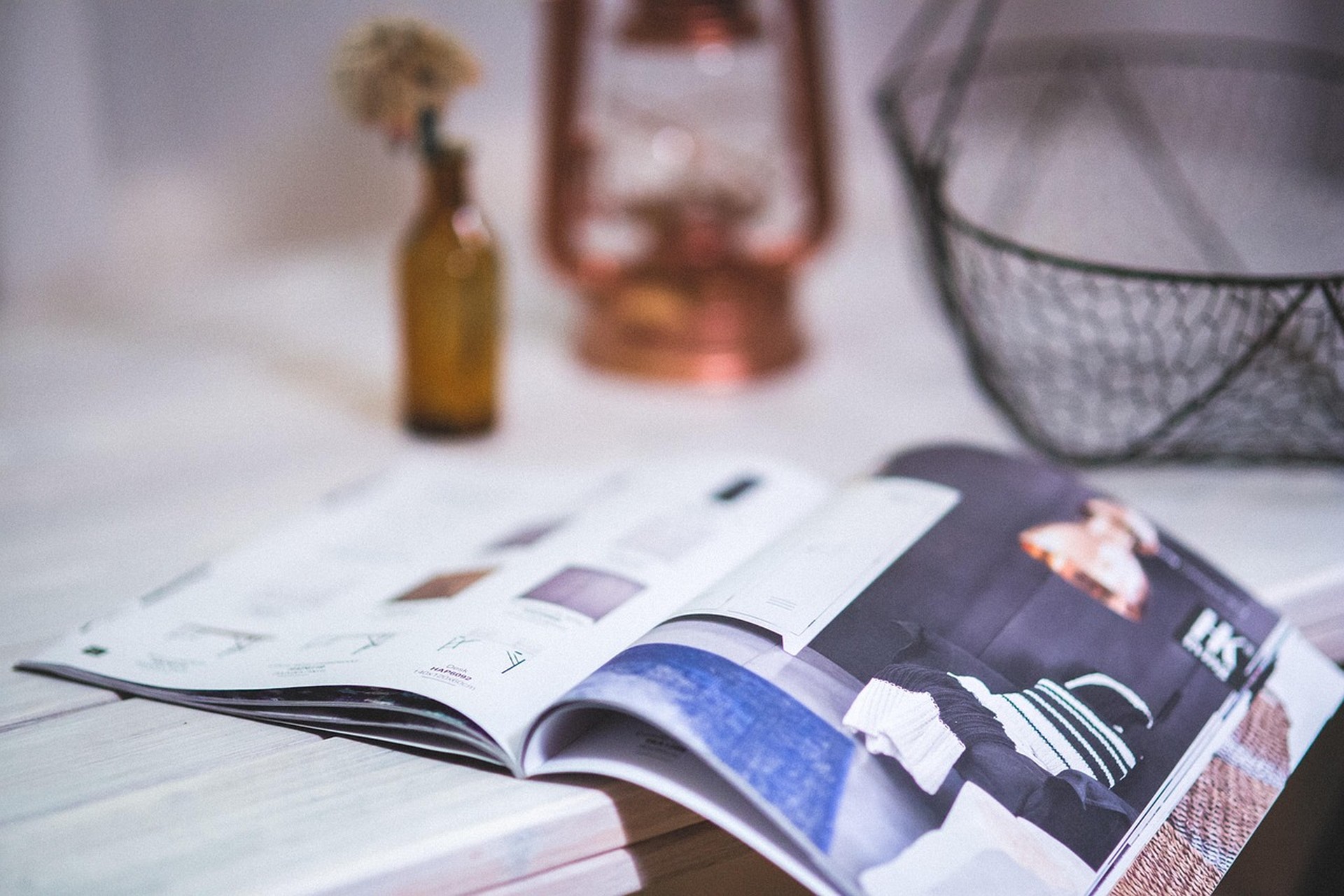
The picture at the top is an open magazine on a table. A lamp and a bottle sit out of focus behind it. Keep the distance the picture already has. The magazine is an object. It is not a portrait of the reader, and it is not a full portrait of whoever is named in it. A page can be about a person without becoming the person. I want that distance when the person is me. The flattering version of the error and the wounding version are the same error. Both of them erase the edge of the page and then treat whatever spills out as fact.
On 19 April 2022, La Dépêche du Midi published a profile under the title La success story d'un jeune entrepreneur gersois rentré au pays. The URL carries the date 18 April. The anniversary I am counting is the 19th, which is how that clipping sits in the public sequence. The title is a success story of a young entrepreneur from the Gers who had come back. That is what the headline says. The article under that title stays in the paper. A profile is a journalist's selection. Selection is the work. It is also the reason a later reader must not treat the selection as the whole life.
Anyone who has been profiled knows the strange week that follows. Friends quote a sentence you did not choose. Strangers decide they know your character. You start to speak in the paper's adjectives because the adjectives are easier than the Tuesday you are actually having. Then the week ends, and the work that was there before the profile is still there. The profile has moved into a stack. The person has to go back to being a person, which is mostly repetition. I wrote in January that repetition is the part of the work that pays. A clipping is one repetition of a public sentence. The life is the repetitions the reporter did not attend.
Success, in a headline, is the paper's word. Do you consider yourself a successful person is a question I have put on this site because the answer is not a clipping's job. A paper can call a stretch of work a success story. The person inside the stretch still has ordinary days, unfinished tasks, and a private life that was not the assignment. If you borrow the headline as your self-portrait, you will be lost the week the headline stops being repeated. The headline was never the portrait. It was a caption.
The biography on this site is the public account I maintain. It is also a document. It can be longer than one newspaper piece, and it is still smaller than a person. Use it when you want the public frame. Use the 2022 clipping when you want that clipping. Do not weld them into a third story that neither page printed. How to use old interviews without inventing a new one is the rule I want applied to every stack of clips, including mine.
The stretch usually comes from kindness. A reader likes you, the piece feels dated, and they add a detail they think they remember so the story can keep walking. Sometimes the stretch comes from the opposite motive. A reader dislikes you, and they add a detail that makes the old page carry a new charge. In both cases the document is being asked to do something documents cannot do. They cannot absorb a later year without a later reporting. If the later reporting does not exist, the later year stays off the page.
The danger of confirmation bias is the habit underneath. Once a flattering profile exists, you notice the facts that match it and misplace the facts that do not. Once a harsh reading exists, you do the same trick in the other direction. The clipping becomes a lens, and then you forget it is a lens. I have watched this happen to public figures I do not know, and I have felt the tug of it when the figure is me. The correction is mechanical. Read the date. Read the byline. Read what the piece actually asserts. Stop where the piece stops.
Important questions about a life are not answered by a caption. What am I responsible for this week. Who is affected by the work. What am I pretending the profile already settled. The 6 human needs, if you use that map at all, are a private inventory. A newspaper does not complete the inventory by calling you a success. A coach and a psychologist are for the places where a public story and a private strain have been confused for long enough to hurt. They are not for polishing the clipping.
It helps to remember who the document belongs to. It belongs to the reporter and to the paper, in the ordinary sense that they chose the questions, the order, and the words around your answers. You may have spoken. You did not edit the life down to the length of the piece. Treating the result as your autobiography is a category error, and it is unfair to the journalist, whose job was a profile, not a complete record.
Reporters Without Borders puts a plain line on its English homepage: protecting journalists means protecting your right to information. I link that page because a profile is information. It has a date. The freedom to publish it is a public good, including when the subject would have preferred a different adjective. That freedom is not an invitation for the subject, or for a later fan, to rewrite the piece in the comments of their own memory.
The Committee to Protect Journalists has, since 1981, defended the right of journalists to report the news safely and without fear of reprisal. Their work is about attacks, prison, and censorship, which is a graver register than a flattering regional profile. I still want the principle in the room. A clipping is a report. The person named in it is not the report. Confusing the two is how subjects start to feel that they own the page, and how readers start to feel that a page owes them the rest of a life. Neither ownership is real.
The anniversary will tempt a refresh. Four years is long enough for a life to add chapters, and short enough that people still treat the old profile as recent if they only met you through it. A later year gets a later page, or it stays in the life and out of the clipping. The 2022 piece keeps the sentences it had on the day it was printed. Earlier readings that were about that piece remain the place for those sentences. March 2026 does not extend them.
The same measure applies if the person in the clipping is not me. If you are reading someone else's profile, you learn what the reporter was able to check and chose to print. A later post, a rumor, or a guess about how they live now is a different object, when it is an object at all. Then you remember that you have met a page. Pages are useful. They are not company.
A local paper is a public room, which is a point I made in November about La Dépêche when the news in that room was national and I was not in it. The 2022 profile is one use of that room. It is not a ticket that puts me inside every later story the paper runs, and it is not a ticket that lets a later story of mine rewrite the profile. The room publishes. The subject does not become the room.
Read it once for accuracy of the sentences you can check, close to the time it appears, and ask for a correction where a checkable fact is wrong. Then read it again years later as a visitor. Notice the date before you notice the praise. Notice what the piece cannot know because it has not happened yet. Notice the sentences that were true of a younger stretch of work and would be false if you pasted them onto this year. Leave them in their year. That is respect for the reporter and relief for you.
If a sentence in the profile still helps a stranger do their work, it can travel as a lesson, with the date attached. If a sentence only helps as a decoration of your identity, leave it in the archive. Identity that depends on a clipping is brittle. The work that followed the clipping is the sturdier thing, and it has its own pages. Do not make the old page carry it.
On 19 April I will look again at what still holds. Until then, the instruction is simple enough to use on any profile, including the one with my name on it. Read the clipping as a clipping. Let the person be larger. Add nothing the page did not already contain.