Damien Soitout
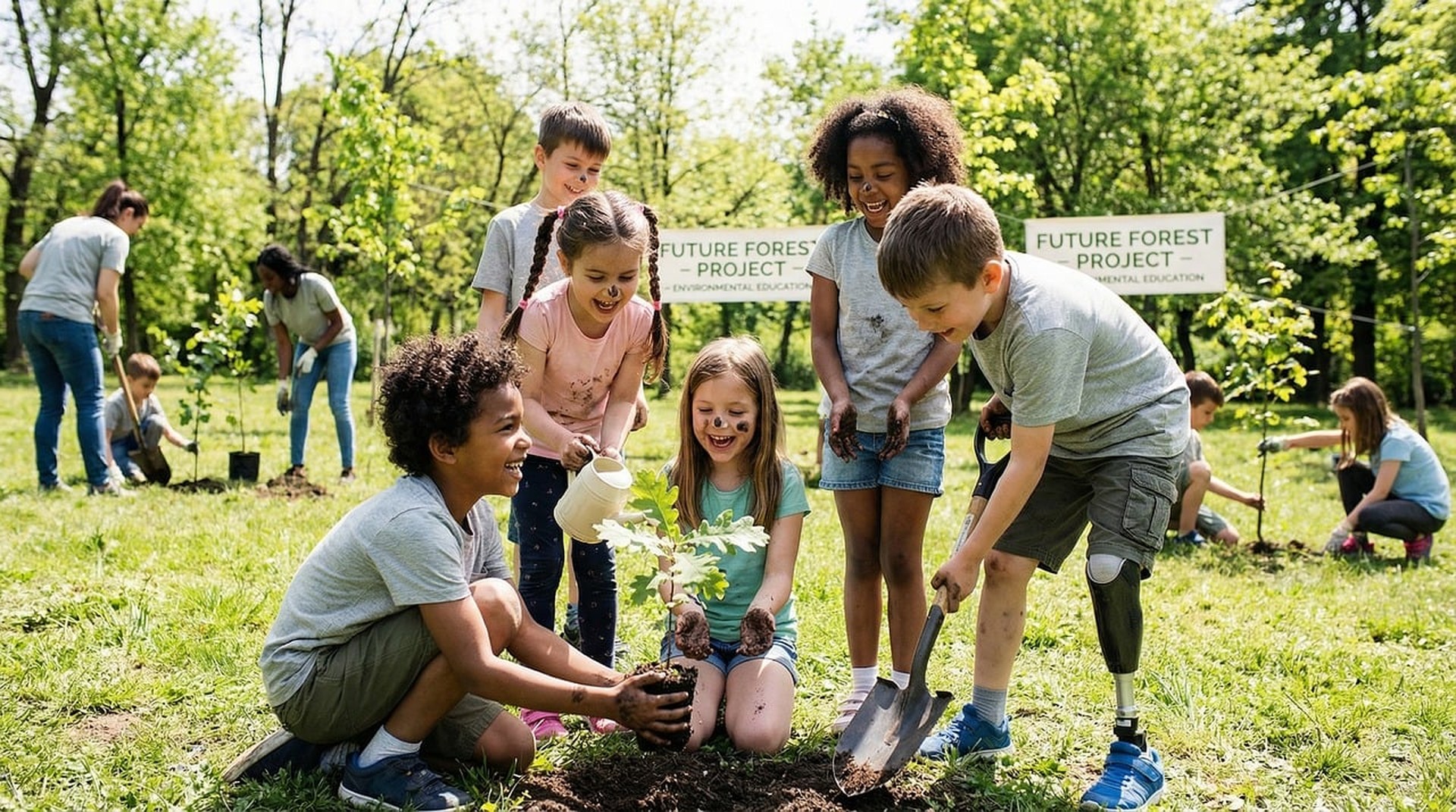
A climate promise and a real planting are different objects. Count the act that is already in the ground, not the sentence spoken in a conference hall.
A tree in the ground is an act. A sentence in a conference hall is a different object, even when the sentence is sincere.
A climate promise and a planting are different objects. I am writing this on 1 November 2021, the day after COP26 opened in Glasgow. The conference is a room full of governments, with cameras, and with sentences about what countries will do. I am not in that room. The useful distinction does not require a badge, and it does not require a recap of speeches I did not hear. A pledge is a sentence about the future. A tree you planted is a living thing already in the ground, or it is not. Counting the sentence as the tree is how serious subjects become slogans.
The United Nations page on what climate change is is the background, and it is worth reading before you adopt anyone's adjective. The climate is a physical system. Warming, weather, oceans, and the risks to people are not a brand. A conference sits on top of that system and tries to organize promises. The promises can be large. They can also be delayed, conditional, or aimed at a year in which the person speaking will not be the person responsible. None of that makes the conference pointless. It makes the conference a place where sentences are produced. Sentences are not forests.
The standing commitment, the one that already exists before this week's microphones, is the Paris Agreement. The UNFCCC page for the Paris Agreement is where that treaty lives in public. Countries under it bring their own national contributions. A new sentence spoken in Glasgow may tighten a contribution, repeat it, or decorate it. You can respect the attempt and still refuse to count the sentence as work already done. The atmosphere does not read a communique. It responds to what is burned, what is built, and what is growing.
One Tree Planted's own about page describes a nonprofit focused on global reforestation. The work they name is not a pledge to feel better about a flight. It is projects that restore landscapes where forests can matter for nature and for the people who live there, using trees as a practical, science-based act. I use their page because it is concrete. A donor can see that the organization plants, and can see that planting is restoration of a place, not a sticker. Whether a particular project is well run is a question you are allowed to ask. The category is already clearer than a conference slogan. A tree is either put in the ground by someone, in a place, under a plan, or it is not.
I have talked about that kind of work in the One Tree Planted interview, and the contributions I point people to sit on the contributions page. Read the organization, not my adjective. If you want to understand what this site files under news, the door is the news page. This piece is a news piece because the week is a public week. The instruction I want you to leave with is not a headline. It is a way of counting.
Help make the world better, easy ways to positively impact the world, and kids and the environment, how and why to teach them, are neighboring subjects. They are about acts a person can actually do, including what a child can understand without being frightened for sport. Don't drop out of school sits nearby for a reason that is easy to miss. A generation that can read a pledge, and can also read a project report, is harder to fool with a sentence. Education is not a tree. It is how a person learns the difference.
When you hear a climate promise this week, or any week, ask four questions before you repeat it as if it were a result. Who is bound. By what date. Measured how. Paid for by whom. If any of the four is missing, you are holding a sentence. You may still quote it. Quote it as a sentence. Do not say the forest has been planted because a person with a title hopes it will be. Hope is a human necessity. It is not a unit of forestry.
When you hear a planting claim, ask a different four. Where. Which species, or at least which kind of ecosystem. Who maintains it after the photograph. What happens if the trees die. A sapling in a press picture is closer to an act than a pledge is, and it is still not a forest. Forests take years, water, protection from fire and from goats, and a community that has a reason to let them stand. One Tree Planted's language about restoring priority landscapes is an attempt to say that a tree is not a dot on a map. Use that standard on anyone, including organizations you like. Affection is not an audit.
Companies will hand you both objects in one brochure. They will pledge a year, and they will show a volunteer with a shovel. Thank the volunteer if the shovel was real. Do not let the photograph retire the pledge's missing date. Do not let the pledge retire the question of whether the sapling is alive in November of a later year. The two questions are both allowed. People who want you to pick one question are selling you something.
There is a personal version, and it is the one that keeps the public version honest. If you say you will plant, plant, or pay an organization that plants and then read what they did with the money. If you say you will use less, change a use you can point at. A promise you make to yourself at a kitchen table is still a promise. It becomes an act when the bin, the bill, or the ground is different. I am not interested in a smaller life as a costume. I am interested in the difference between a sentence and a change. The difference is the same size in a household as it is in a conference. Only the microphone changes.
Glasgow will produce a great deal of language before it produces a text. Some of the language will be specific and brave. Some of it will be a country explaining why its sentence is more important than its present burning. You do not have to referee every speech to stay clean. Pick one official text, when it exists, and one concrete project, and read both. Ignore the rest or it will use up the attention you needed for the reading. Attention is part of the count. A person who forwards twenty pledges and never opens a project page has participated in weather, not in work.
Do not require yourself to be in the room in order to act. The room is full. The ground is elsewhere. A reader in any country can separate a promise from a planting, and can choose an act that survives the closing ceremony. The act may be money sent to a planter you have actually read. It may be a change in what your own firm burns, written down where a colleague can see it. It may be teaching a child the difference between a word and a tree, which is Kids and the environment in a single afternoon. The scale can be modest. The category has to be right. Modest and real beats vast and verbal.
Skepticism is not the same as contempt. I have no respect for the sneer that treats every public promise as a fraud in order to avoid doing anything local. That sneer is also a slogan. The adults in the room are the ones who can say: this sentence binds this actor by this date, and this other thing is a tree, and I will not add them together to feel better. That sentence is harder than cynicism. It leaves you with work.
If you support a planter, read their page the way you would read a supplier. What do they say they do. Where. With what standard of restoration. One Tree Planted has put that in public. Other organizations have too. Choose with your eyes open, then let the choice be a transfer or a planting, not a post about how much you care. Caring is the start. The tree is the count.
Keep a small record of your own, the way you would keep a receipt. The date you gave, the name of the organization, and what their page said the money was for. You do not publish the record to be admired. You keep it so that, in a later month, you can tell a promise you made in a loud week from a transfer that actually left your account. The same habit works for a change inside a firm: the date the boiler was replaced, the date a route was shortened, the bill that shows the fuel. A year from now the Glasgow sentences will be hard to remember accurately. Your own act will be easy to remember if you wrote the plain facts down while they were fresh. That note is not a forest. It is how you stop your memory from upgrading a feeling into a fact.
If you remember one distinction from this week in Glasgow, remember this. A pledge is not a tree you planted. The conference can matter and still be a room of sentences. The Paris Agreement is the standing frame. A planting is a different object, in a place, done by someone, and it remains different after the cameras leave. Keep the two apart. Then do one act you could point at if the slogans all went quiet.