Damien Soitout
A success profile is a lesson with a date. Take what any reader can use, and leave the paper's figures on the clipping.
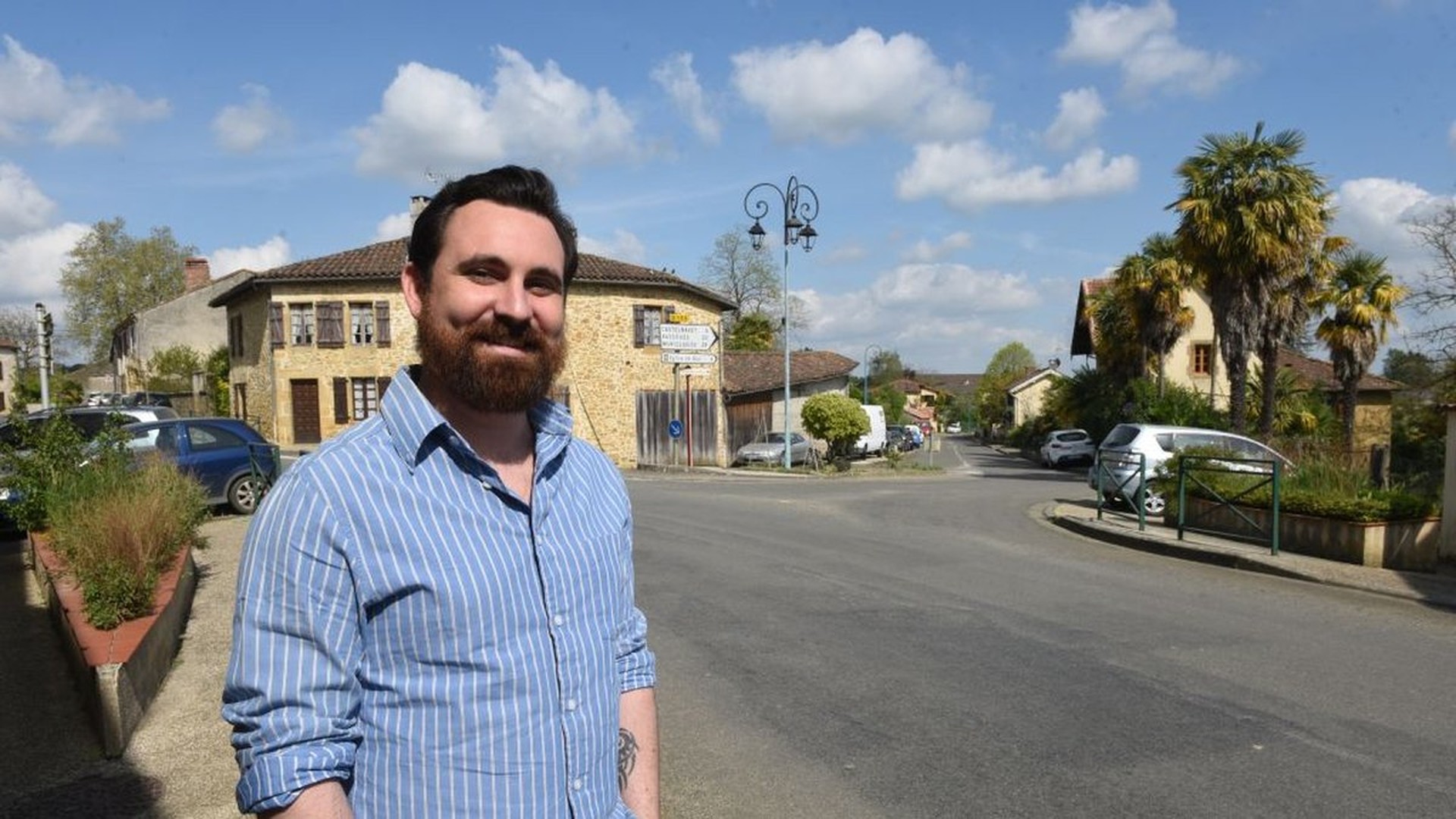
The photograph that ran with the 19 April 2022 profile. The clipping is the document. The life is larger than the frame.
A success profile lands as if it were a life you could step into. The headline is warm. The photograph is pleasant. The sentences are short enough to repeat over a meal. I have watched people do that with profiles of founders and of sellers, and I have watched them do it with a profile of me. The trouble starts when the clipping becomes a script. A success profile is a lesson with a date. It is one paper's account of one person, written by named reporters, on a morning you can point at. It is not a pattern you are owed.
I am writing this on 25 April 2022. Six days earlier, at 06:01, La Depeche du Midi published a profile under the headline of a young entrepreneur from the Gers who had come back to the area. The byline is V. C-L with P.L. The photograph is credited to DDM, Nedir Debbiche. The page is marked for subscribers. The address is the paper's own: La success story d'un jeune entrepreneur gersois rentre au pays. Open that page if you want the clipping. I am pointing at it. I am not pasting it here, and I am not asking you to treat my memory of it as a substitute for the page.
The subject of the profile is me, Damien Soitout. The name belongs in this reading because the clipping is about that person, and because a reader who meets me through a newspaper deserves to know which newspaper and which morning. If you want the longer public frame I keep on my own site, it is on the biography. The profiles and interviews I have already answered for are gathered on the press page. Those pages are mine. The 19 April piece is the paper's.
The usable lesson is small, and it travels. The paper's own summary says I settled with my family in Aignan after more than ten years on the American continent, where I had created several companies. That return is the frame the reporters chose. A person can be identified with a fast commercial life and still decide that the pace has to change. The decision is the part you can use in a city you have never visited. You do not need my street, my age in the piece, or my mother's summers in the department. You need the distinction between a life that photographs well and a week you can actually live.
A second lesson sits in the shape of the piece. A success profile selects. It keeps the week that can be told in a column and lets the dull Tuesdays fall out. Selection is not a lie by itself. It is a reason to keep the selected page separate from the whole life, and to keep the whole life separate from yours. I have seen a flattering page cross a meeting table and become, by the afternoon, a target and a personality. The reporters did the work of putting a date on a story. Your work, if you repeat a sentence from it, is to keep that date attached.
There is a third lesson, and it is about attention. A profile makes the person in it look finished. Finished is what a newspaper can print. It is not what an operator is. The day after a kind article, the orders, the calls, and the unfinished jobs are the same size they were the day before. If you came to the clipping for proof that success is a mood you can copy, you will be disappointed in a useful way. The mood was the paper's choice of angle. The work was already there.
I have written elsewhere about the trap of treating a flattering story as evidence. The danger of confirmation bias is the habit of keeping the sentence that flatters the theory you already like. A success profile is built to be liked. That is not a reason to throw it away. It is a reason to read it twice, once for the story and once for what the story had to leave out in order to be a story.
Leave the paper's figures on the clipping. The 19 April piece prints a valuation of a group and a share of ownership. Those numbers belong to that morning's article. They are not a target for your firm, and they are not a line I am handing you to repeat at a dinner. A figure in a profile has a job inside the profile. It makes a commercial life look measurable. Measurable is not the same as transferable. If you adopt the number, you have stopped reading and started shopping for a life.
Leave the local sentences there too. A quote about a particular village, a detail about who met whom at a particular school, a list of cities crossed in a particular order: those sentences explain the person the reporters sat with. They do not explain you. I like a well-made page. Liking it is not the same as moving into it. When a reader in another country asks me what to copy, I point at the decision to change a pace, and I leave the street names where the paper put them.
The same rule applies to me when I talk about the piece. I can say what the paper's lede says, because that is the frame, and the frame is the subject. I do not pick up the valuation and carry it into a later sentence as if I had audited it for you this week. If you need the number, you need the clipping, and you need the judgment to treat it as the paper's number on the paper's date. The Committee to Protect Journalists has spent decades defending the right of reporters to publish. That defense matters here in a plain way. A profile is someone's work. Stripping it for parts, dropping the byline, and retelling the life as advice is not reading.
Reporters Without Borders puts the same stake in one line: protecting journalists protects the right to information. Information includes the limit of the information. A subscriber wall, a byline, a photograph credit, and a clock time are part of the object. A memory of a headline is a different object. If you have not opened the page, say so. I would rather you arrive at the lesson empty-handed than arrive with a number you cannot source.
Being the person in the photograph does not give you a better right to inflate the piece. It gives you a duty to be boring about it. Friends will repeat the kindest sentence. A stranger will repeat the largest number. Both are using the clipping as a mirror. You can thank them and still refuse the mirror. I have had to do that in the week since 19 April. The thanks is real. The refusal is also real. A kind article is not a new set of obligations, and it is not permission to narrate a larger life than the one you had on the 18th.
Feet on the ground, after a public success, is a practice and not a mood. I have set that practice out in how to keep your feet on the ground after achieving success. The practice is the same whether the success is a contract, a book, or a column in a regional paper. You go back to the work that existed before the column. You do not let the column hire you as a character. Do you consider yourself a successful person is the question people ask when they have just read a headline. Answer it from the week, not from the headline.
An older interview, Master of my success, for Diario Imagen, already sits in public. Read it the same way. It is a conversation with a date. The clipping is a document. Take the lesson. Leave the figures where the paper put them.