
Damien Soitout
Read the trade rule that governs the shipment. The WTO text and the customs value are the rule. Stop where that text stops.
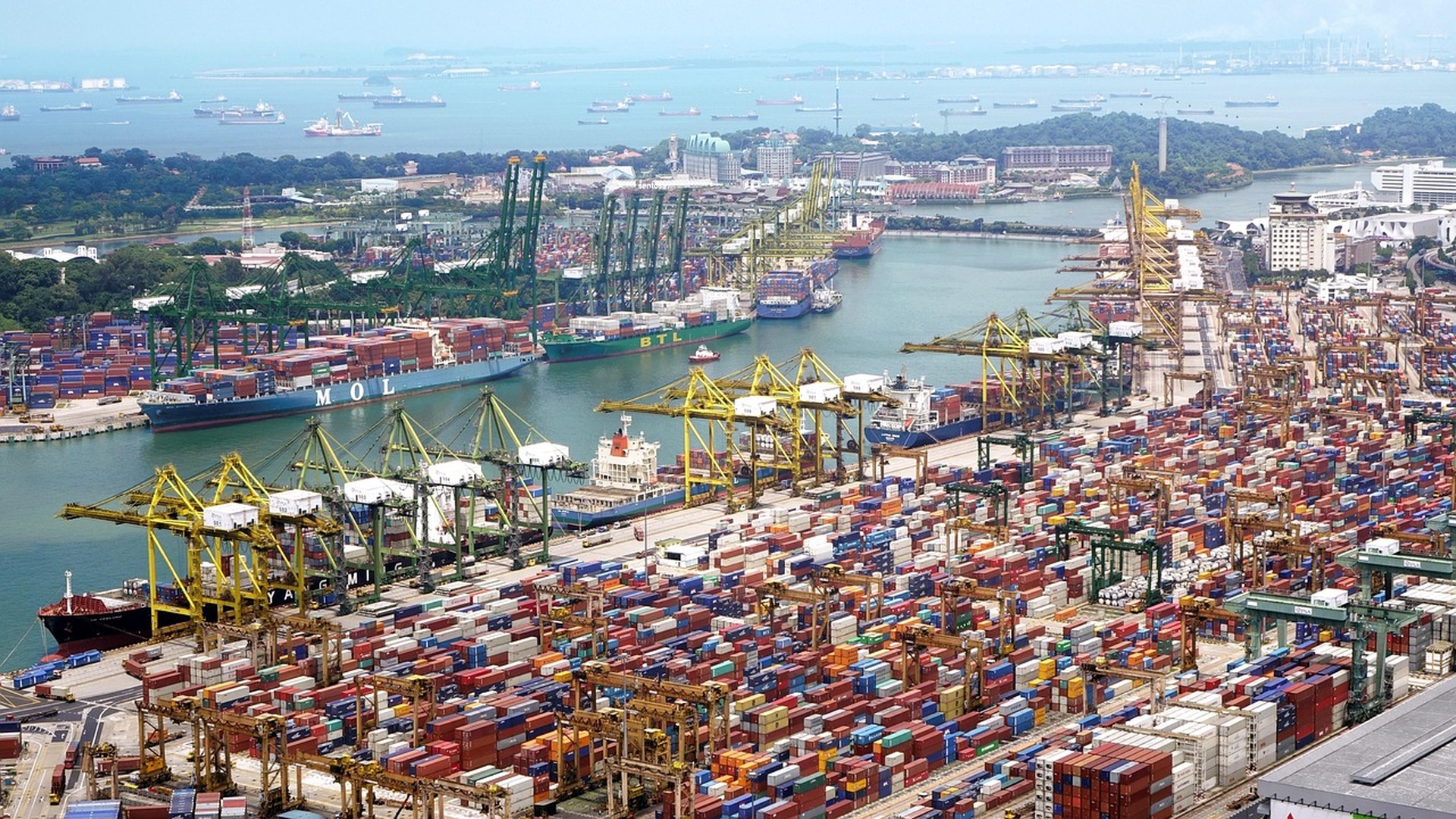
The boxes are visible. The rule that lets them land is a text.
Anyone who has bought across a border knows the moment. The goods are on the water, or they are in a warehouse on the wrong side of a line, and someone in the office starts to guess. The guess sounds like experience. “Last time they waved it through.” “A friend said this code is cheaper.” “If we describe it as a sample, the rule will not notice.” I have heard versions of all three, in more than one country. The moment the guess replaces the text, you are no longer importing. You are writing a private law and hoping a public officer will adopt it.
Read the trade rule before you invent one. The rule is not a mood and it is not a tip. It is the text that governs this shipment: what the goods are called, what they are worth for customs purposes, where they came from, who may bring them in, and which paper has to travel with them. Your commercial invoice is a fact inside that text. It is not a substitute for the text. If you have not opened the rule that applies to this commodity, this origin, and this destination, you do not yet know what you are allowed to do. How a local product crosses a border is the longer version of that sentence. A local product does not become international because you want a new customer. It becomes international when it meets a rule.
The shop is not the company, and it is also not the customs office. A product card can tell a buyer what the object is in the shop of origin. It cannot tell an importer the duty, the licence, or the ban. I said that so the shelf would stay a shelf. Here the point is the next room. Once the object moves, the reading begins, and the reading has a place where it ends.
The World Trade Organization describes itself, in its own introductory page, as a negotiating forum, a set of rules, and a place to settle disputes. The agreements are contracts among governments. They exist so that producers, exporters, and importers can conduct business while governments keep the room to protect consumers and to stop disease. The system's purpose, in the WTO's words, is to help trade flow as freely as possible without undesirable side effects, and to make the rules transparent and predictable so that a company is not surprised by a sudden change of policy. That page is What is the World Trade Organization?
Predictable does not mean simple, and it does not mean the same in every port. It means the rule is written down somewhere a person can ask for it. Governments notify. Schedules of concessions exist. A measure that restricts quantity, a sanitary rule, a technical standard, a rule of origin: each of these has a home in the agreements. You do not have to love the institution to use the fact it insists on. If a barrier is legal, it has a text. If you cannot find the text, you do not yet have a plan. You have a hope.
I use the WTO page as the map, not as the shipment. The map tells you that the rule is a contract between states, and that your company is a user of that contract. It does not calculate your consignment. The calculation lives in the national tariff, the licence, and the valuation rule that the contract points to. People who “know a guy at the port” are often describing a practice. A practice can be legal, customary, or a rumour. Only the text tells you which.
The fight I see most often is about value. Someone wants the number on the customs form to be a number that makes the shipment cheaper to clear. The wish is understandable. It is not a reading. The WTO's technical note on customs valuation defines the procedure: it is how the customs value of imported goods is determined. When the duty is a percentage of value, that number decides the tax. When the duty is a set sum per unit, value is not the question, and the valuation agreement does not apply. Where it does apply, the agreement uses the transaction value, the price actually paid or payable for the imported goods, because the point of the system is a fair, uniform, neutral value that follows commercial reality and rules out an arbitrary or fictitious figure. Related-party prices and other adjustments are part of that reading. They are not a blank you get to fill with a friendlier story.
A duty rate has to come from the tariff for this code, this origin, and this day. Start from the transaction you actually have. Keep the invoice, the contract, and the proof of payment in one place. If the buyer and the seller are related, do not hide the relationship in a softer description of the goods. If you gave the seller a mould, a design, or a material, ask whether that assist belongs in the value. Then stop. If the text does not answer the next question, the next question goes to a broker or to the customs authority, in writing. It does not go to a group chat.
Classification is the twin of value. The same object can be described in two ways by two hopeful people, and only one description will match the nomenclature the destination uses. “Part” and “finished good” are not moods. They are headings. Read the heading. Read the notes to the chapter. If two headings seem possible, that ambiguity is itself a fact to take to someone who clears goods for a living. What Is a Broker? is the piece to read before you decide you can be your own expert on a code you saw once. A broker is not a magician who makes rules disappear. A good broker is a person who reads the text you were about to invent.
There is a family of ideas that feel clever and are just unread rules. Split the shipment so each piece falls under a threshold. Call a commercial sale a gift. Route the goods through a third country and declare a new origin. Misstate the material because a different material pays less. Ask a supplier to print a document the goods do not earn. Each of these is a way of shopping for a rule you like better than the rule you have. The WTO's point about transparency cuts both ways. The rules are published so that you can follow them, and so that an officer can see when you did not.
Insurance for Entrepreneurs sits beside this, and it does not replace it. Insurance can pay for a container that is lost, for a liability, for a credit that fails. It cannot insure you against a description you knew was false. If you want the cover, tell the insurer the same story you tell the customs form. Two stories is how a claim dies and how a clearance becomes a case. How to Get Ahead in a Crowded Market is the commercial question, and it is a fair one. You get ahead by being right about the product and the buyer. You do not get ahead by being creative about the border. A competitor who clears cleanly will still be selling when your container is sitting in a bonded room.
Why do businesses fail belongs in this conversation for a dull reason. Firms die of cash, of a customer who never existed, and of a cost they refused to count. A duty you pretended was zero is a cost. A seizure is a cost. A year of arguing with an authority is a cost. If you want the older piece, it is here: Why do businesses fail? Add the unread rule to the list. It fails a business just as reliably as an unread lease.
For a company exporting from the United States, the International Trade Administration keeps a public desk called Export Solutions. It points you to exporter resources, to a roadmap for getting ready, and to the Commercial Service, which is people with trade experience rather than a slogan. The same site is honest about the limit of its tools. Its own note on the experimental navigator says the tool can be incomplete, that you should check the underlying pages, and that a wrong answer from a tool is not a defence if you break an export rule. I like that sentence. It is the whole lesson in one place. A guide can orient you. The rule still governs. If you are importing into the United States, or moving goods between two other countries, you use the equivalent desk: the customs authority of the destination, and the export control desk of the origin. You do not borrow a US pamphlet and pretend it is a universal code.
Practical reading looks like this. Write down the commodity in the seller's words and in the buyer's words. Find the heading you think applies, and write the reason in one paragraph. Find the valuation method the destination uses, and attach the invoice. List licences, sanctions, and standards that might touch the goods, including sanitary rules if anything is edible, animal, or plant. Then ask a person whose job is clearance to mark what you got wrong. The meeting that should have been a page is relevant even here. Do not gather six people to speculate. Send the page: the description, the heading you propose, the value, the origin, the questions you cannot answer. Meet only if the page produces a decision.
A rule will not decide your commercial life. It will not tell you whether the buyer is good, whether the margin survives the freight, or whether you should be in this trade at all. Those are your questions, and they come after the text, not instead of it. When the text stops, you stop inventing. You either have an answer you can show an officer, or you have a question you have asked the authority and not yet answered yourself. Both are respectable. A guessed rate, a guessed code, and a route chosen because it sounds softer are not.
I have imported and I have watched other people import. The ones who stay in the trade are boring on purpose. They keep the same description from the purchase order to the entry. They pay what the tariff says. They change the shipment when the rule changes, instead of changing the story. The ones who get clever get a letter. If you are about to move a local product across a border, open the text that governs this shipment, read it until you can say what it requires, and stop at the last line it actually contains. The rest is not a rule. It is a story you would be asking a stranger in uniform to believe.