Damien Soitout
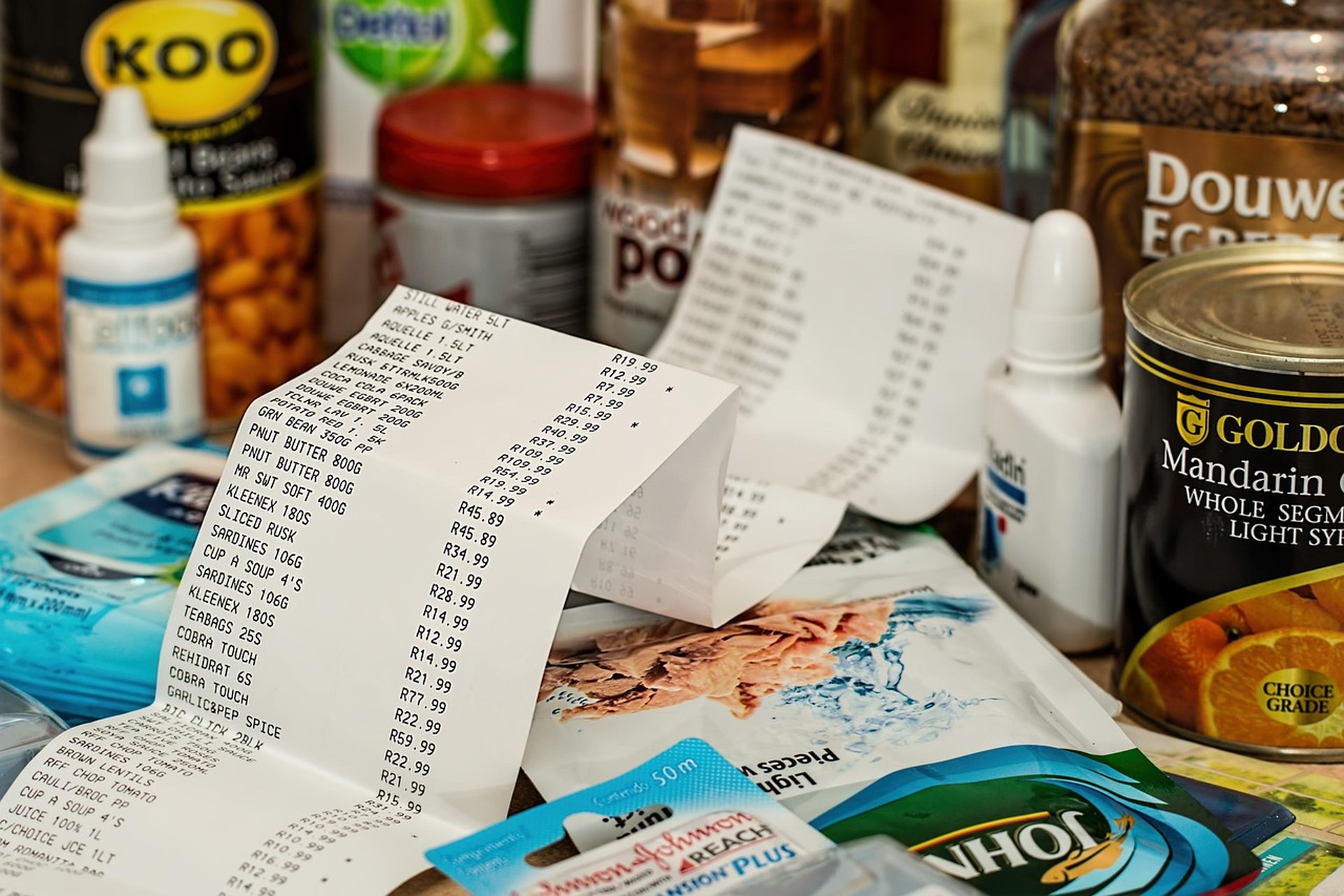
The receipt is the inflation report for your kitchen. Read what you paid, then check an official price index instead of freezing a number.
Inflation reaches the kitchen on a strip of paper. The headline arrives later, and it is an average, not your basket.
Inflation reaches a kitchen before it reaches a headline. You find it on a receipt: the same oil, the same bread, the same bag of rice, a number that does not match the number in your hand's memory. I am writing this in March 2022, when that experience is widespread and when people are tempted to do one of two useless things. They wait for a headline to tell them whether they are allowed to have noticed. Or they freeze a figure they heard once, and they repeat it as if it were a measurement of their own shop. The receipt is the inflation report for your household. The official index is where you go for the number that describes a country. They are not the same document. You need both, and you should not invent either.
This is any household, not a particular kitchen. I am not describing one family's basket as if it were the economy. Your basket is local. It depends on what you eat, where you buy it, and what you cannot substitute. A national index is an average, built with a method, published on a date. If you argue with your receipt by quoting a number you have not opened, you are not being numerate. You are being loyal to a sentence. Loyalty to a sentence is how people miss the price that is actually in front of them.
How to read a month of spending is the discipline under this one. A month of lines tells you what left the account. A receipt tells you the price of a thing on a day. Manage a monthly budget is how you give the next month a plan once you have seen both. 100 Hours is a set of tools, not a recipe, and it will not price your bread. Do not ask a book to be a till. The till is already printing the report. Keep it long enough to read it.
Read a receipt against another receipt, not against a mood. If you can, keep the slip for a shop you repeat: the same kind of oil, the same size, the same store or the same class of store. One slip is an anecdote. Two slips, a month apart, are a comparison. Write the date, the item, the size, and the price. Do not “correct” the price in your head because the brand changed. If the brand changed, that is part of the report. You traded down, or you traded up, or the old brand was not there. Substitution is how households live through a price shock. Hiding the substitution makes you think you are measuring inflation when you are measuring a different choice.
Separate the price from the quantity. A larger bill can mean higher prices, or it can mean a larger shop, or both. If you only remember the total at the bottom, you will blame the economy for a trolley you filled differently. Unit price is the line that tells on the shelf. Total is the line that tells on you and on the shelf together. Are you a smart spender is the question of whether the trolley matches the life you meant to buy. What does it mean to be rich is a different question, and a dangerous one to mix in while you are standing in an aisle. Rich is not “untouched by prices.” People with money feel a different basket and still live in the same price system. How to save money while living on a budget is what you do after you have seen which lines moved. How to profit from a recession and make money is a later ambition, and it is a bad first response to a grocery slip. The slip is asking you to see. It is not asking you to become clever.
When can I start spending my money is about permission and timing in a life, not about a single shop. I mention it so you do not turn a receipt into a ban on living. A higher price is a fact. A fact can change what you buy. It does not, by itself, mean you have failed or that pleasure is now immoral. Have fun without spending money is available when you want it. It is not a punishment for noticing oil. Read the slip, choose, and keep your dignity. Dignity is not a line item. It is what remains when you stop lying about the line item.
For the number that is not your kitchen, go to the statistical office and read the definition before you read the headline. In France, the instrument is the consumer price index published by INSEE. The definition is on INSEE's page for the consumer price index. INSEE says the index is the instrument used to measure inflation. It estimates the average variation, between two periods, in the prices of products consumed by households. It is a composite measure, at constant quality. It is published each month in the Official Journal. The same page says, and this matters, that the consumer price index is not an index of the cost of living. It measures the effect of price changes on the cost of the products households consume. A cost-of-living index would ask what it takes to hold a standard of living still. Those are different questions. If you quote the index as “what my life costs,” you have changed the instrument.
I am not putting a rate in this piece. A rate you freeze in March, and repeat in a later month, is a stale sentence. Open the index for the period you mean, in the country you mean, and read the figure that is actually published for that period. If you live outside France, use your own statistical office the same way. The method is the method. The office changes. Do not borrow a French figure to describe a shop in another country, and do not borrow a television figure you cannot find again. If you cannot find it again, you do not have it.
Your receipt and the index can disagree without either one being false. The index is an average basket, quality held as constant as the statisticians can manage. Your receipt is one household, one day, one set of substitutions. If your oil doubled and the index moved by less, you are not imagining the oil. You are living in a corner of the basket that the average dilutes. If the index jumped and your receipt did not, you may be shopping differently, or you may buy less of what moved. Both readings are allowed. The error is to throw away the receipt because a headline feels more official, or to throw away the index because your one shop felt more vivid. Vivid is not a sample. Official is not your trolley.
Once a month, put three things on one page. The repeating prices you actually pay, from slips you kept. The official index for the latest period you can open, copied with its date and its source, not from memory. The categories in your budget that those prices feed: food, fuel, and whatever else moved. Manage a monthly budget is where that third item becomes a plan. If food at home has moved and food outside has not, the plan is not “spend less” in the abstract. The plan is a choice about which of those piles you are willing to change. How to read a month of spending keeps you from inventing the pile. The receipt keeps you from inventing the price inside the pile.
Bank records will not replace the slip. A card payment of a round amount at a shop does not tell you whether the bread changed or the trolley did. HelpWithMyBank, on bank accounts, is there when the account itself is unclear: a fee, a hold, a line you do not recognize. Use it for the account. Use the receipt for the price. FDIC Money Smart is a set of public lessons in handling money, useful if the vocabulary of statements is still fog. Fog is expensive in a month when prices move, because fog lets a headline occupy the space where your own numbers should be.
Talk about the slip in the household without turning it into a verdict. The receipt is the report. The index is the average. Keep both dates on the page.